Highlander
Transcripts:
DVD Extras
|
Highlander |
|
(from The Best of Highlander: Deluxe Collector's Edition 2002)

|
Bill Panzer (Executive Producer): This was a wonderfully complex interwoven story that we took quite a lot of time wrestling with.
Well, it was the end of Richie's innocence. It was the time when Adrian -- after Adrian came back, when he had become dark -- and he realized that the, uh, that even idols have feet of clay. It was a time when Joe was willing to give up the Watchers for his friendship. There were many moments in this story that were very incredibly heartfelt. You know, I'll always remember the scene with Joe and Duncan standing in front of a window. And Joe offering up his heart to Duncan, and Duncan saying 'It can't be that way.'
Clip from "The End of Innocence":
And I thought that was a great moment for the actors and I thought Joe did a wonderful job at it. Jim Byrnes (Actor): The Watchers are an age-old society that chronicle the comings and goings of the Immortals. We take an oath, which some of us take some liberties with. But that's the way life is, particularly with Joe Dawson.
Clip from "The End of Innocence":
At the beginning of the show, I say that "we're a society of Watchers who observe and record, yet never interfere." Well, it couldn't be further from the truth for me. But that's partly, I mean, the thing, as I said, Joe had been in the Marine Corps. And the one thing, you know, is Semper Fidelis, which is the Marine motto: 'Always faithful.' And more than anything else, you never leave your buddy.
Clip from "The End of Innocence":
And it's a hell of a thing when you have to weigh your ethics and your honor against the reality of a flesh and blood life of someone you know. Well, I'm going to go with the life of someone I know.
Clip from "The End of Innocence":
But I know that in my heart, in Joe's heart, that's the way he's going to go, because this is his friend. And these are both his friends, and he doesn't want to see either one of them hurt.
Clip from "The End of Innocence":
From the time he was twenty years old, he signed on to this thing, and then here he is thirty years later, saying that, well, I'm just going to have to let that, you know, that part of my life go and carry on in another way, because I don't feel that-- I can't carry that weight around in my heart.
And Duncan realizes that it is important that when someday there are no more Immortals left, that their lives, and their passing of time, and their passage on the planet has been chronicled by people who have respect and affection and understanding for what they stood for and what they did when they were here.
Clip from "The End of Innocence" unused scene:
David Abramowitz: "End of Innocence" occurred because we wanted to show some of the downsides of immortality.
And the writers did a wonderful job with this because there were so many questions. There were people who had changed over time.
It followed "Something Wicked" and "Deliverance" when Richie discovered that MacLeod wasn't perfect, which was stunning for him and sent him off the deep end where he could have easily become a villain, but he didn't.
I was really getting all the light stuff, all sort of the comic relief, all of the stuff that wasn't really driven by the drama and the life-and-death situations. So yeah, so that's what I pushed for. And then I got it.
Clip from "The End of Innocence" behind-the-scenes:
We wanted to make Richie grow up.
And he suddenly is really welcomed to the real Immortal world. This is what can happen. This is what's possibly. He's incredibly disillusioned.
A lot of what we were playing was fueled by real emotions and real feelings between Adrian and I. My having been distanced from the show at that time.
We wanted to have an episode where the character would go from "Gee, isn't it great to be an Immortal" to "This life can suck sometimes."
So I was excited to sort of bring this new, this-- not new, but evolved person and character to the film.
And I think Richie grew as a character from then on and was no longer the "golly gee, isn't it great to be immortal" kid.
That scene in the alley there with Adrian, when I say the line to him, you know, "Next time you pull a sword on me, it won't be so easy." There's a lot of real stuff there. It was sort of my way of also saying, hey, you know, I was just this little kid when we started this show. But I've grown up, you know, a bit now and I've sort of gotten to become a part of this world and here I am, whether you like it or not.
Clip from "The End of Innocence":
Richie was in that mode, Duncan knows it's wrong, but now the guy that Richie's killed was this, uh, friend of an Immortal that killed Duncan's mentor. And the issue of honor and of-- when Clay says -- when Adrian offers to let him go and Clay says, nope, I'm going to come right after Richie if you let me go. F. Braun McAsh (Sword Master): In the fight scene where we first see Graham Ash and MacLeod sparring with each other, Ash is mentioning a couple of moves... and none of those moves are real.
Clip from "The End of Innocence":
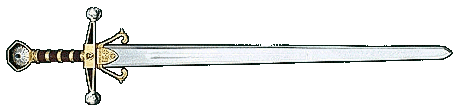
It was just something that they invented to describe a move that Graham Ash was supposed to have invented. So when he fights Clay, we-- again, Ash is using a gothic bastard sword from the early fourteenth century and Clay, of course, is using a scimitar. So the question was just what kind of moves can you use in the choreography that mesh a curved, single-edged weapon with a longer, two-handed, double-edged weapon. So that was more of the challenge than trying to do anything that was particularly authentic. This is part of the problem and the challenge of Highlander, that you're constantly having to match swords that have completely and totally disparate styles and have never, ever, met in history. So an awful lot of what we're doing is inventing because we're working in a visual medium, not really compromising historical authenticity per se, but just realizing that there are some things for which there is no historical precedent at all, so... you make it up. Don Paonessa (Producer • Post Production): The one thing as far as post-production is concerned that I did and that I worked out with Gérard Hameline, who directed it, was the Quickening. And what we decided to do in that Quickening was, again, some sort of magical event taking place where MacLeod, as he's being Quickened, is in an environment that goes to night during the Quickening and then comes back to day when the Quickening is over. Now, in this case, we weren't forced to do that because of the way the show was shot and the production time problem; it was done consciously and we decided this before we ever shot anything. What we did was we had Adrian do most of the Quickening in front of a blue screen that we had on location. We shot him, he did his machinations and did all the stuff that he does during the Quickening. Then what we did is we removed the blue screen with a locked-down camera, we shot the background, which was the harbor and the city skyline. Then what we did was we left the camera there and we did a time-lapse from day to night. And then when we got into post, we took that material and put it all together so that the appearances of MacLeod being-- taking the head of the bad guy during the day, starting to get Quickened, it turns to night... By the end of the Quickening, it comes back to day and the Quickening is over. So that was kind of fun, and it was an unusual one because we weren't forced to do it under duress. F. Braun McAsh: Every time I choreograph a fight, I try and use as many authentic moves as is dramatically feasible or physically possible depending on who's playing the role. But also you're looking for new visual images, so I was able to use certain things in the final fight between Clay and MacLeod that I had not used in previous shows. The character is a Moorish character, so the choice of weapon for Clay was mainly dictated by his culture. He would use a scimitar or a shamshir. So the style of fighting for this particular weapon is very, very distinct. It's very circular because the shamshir has a very oblique curve because it's used more close-in for drawing cuts, and the cuts are relatively circular in nature. It was, I think, a very good fight in terms of its execution. Réal Andrews did a very, very good job on it, who again had never touched a sword before in his life but was very, very physically adept. So he picked up the choreography quite readily, especially this one thing that we call a hanging guard where the sword is reversed and the point facing down. You take a parry and you then press into the parry so that your opponent cannot release the blade because naturally as soon as he does you just go 'clunk'. So we had this sort of interesting visual image of Clay and MacLeod hung in a move and just following each other very, very slowly, wondering who's going to be the first person to release the sword and what's going to happen when that happens. So hopefully we were able to take a good visual image and build up a little bit of tension in terms of what's going to happen next, who's going to prevail. At the end of the fight, for the kill, I choreographed something that was unique to the Highlander fights, involving a reverse grip parry and a spin while simultaneously seizing his opponent's weapon and using both the swords against him. [F. Braun McAsh & Anthony De Longis stage the end of the fight between Haresh Clay & Duncan MacLeod.] |
|
Bill Panzer (Executive Producer): Any time you reach a milestone like that, which doesn't happen very often in television that you get to a hundred episodes of a drama, everybody's pretty excited. You want to make sure that what you do is going to be worthy of what got you to that place in the first place.
"Comes a Horseman", "Revelation", was more than about Methos's darkness. It was about friendship, it was about... and if there seems to be a theme here, which is fairly biblical in everything, that's where this all comes from. I steal from anybody and stealing from the Bible was a good place to start. And the four horsemen were such bad guys.
When you saw those four guys coming over the hill on the horses with those absolutely outrageous outfits and masks and makeup and stuff, it was thrilling.
These four horsemen WERE the four horsemen of the apocalypse. So we thought, wouldn't it be great if the four horsemen became immortal? And we thought that was a natural. Plus, I love the flashbacks.
In the flashbacks, of course, were the transitions and the one that I particularly enjoyed doing that I thought worked quite well was the hourglass transition, where MacLeod is with Cassandra in the loft. As she's talking about what happened in the past, we push in to this hourglass that's on the table. And we just keep pushing in on that and as we push in, we start to see this little figure in the sand in the hourglass, and we kind of push through the hourglass into the past. I talked it over with Gérard, shot what we needed in order to make the transition work. I thought it was a successful one. Peter Wingfield (Actor): I was very surprised when "Comes a Horseman" turned up. The props guy, who came to me and said, "Have you seen the next script?" I said, "no." He said, "You're one of the four horsemen of the apocalypse."
Clip from "Comes a Horseman":
"I killed tens of thousand! And I did it because I liked it." And I think that's such a profound statement for him to make and an ongoing character for him to make and puts his whole being in some sort of perspective where you learn that someone who lives a hundred generations can be a lot of different people.
It came absolutely out of nowhere, so far as I was concerned, but it made sense. It made absolute sense with the character, that he spends a lot of time joking about and having a bit of a lark and every now and again he drops in a bit of a pearl of wisdom. But he never talks about himself or about his past.
Going back to my-- to Joe's first, when he accepts the fact that these Immortals exist, this leap of faith that he makes, it's once again, it's like, it's a big one, but it's still that same original impulse that he has of going "No, this can't be true."
Clip from "Comes a Horseman":
Methos still is the marauder. He just keeps that at bay. He has an incredible superego, which is built upon not his need for him to do right, but his need for him to survive.
Clip from "Comes a Horseman":
Peter Wingfield: What a great entrance. Up until that point, you don't know that these two guys know each other. There is this bad guy from the past who we know is really bad. And we think, "Oh, poor Methos, he's been caught by this guy and he's going to lose his head." No, much, much more interesting than that.
Kronos was a great, great, great villain.
When Kronos arrives, I think he has to make a final decision, but I don't think he's made that decision until the very end.
Clip from "Comes a Horseman":
One becomes an extension of the other, and it's very hard to kill yourself, or to kill the extension of who you are. It means that he judges Kronos as not being worthy to live. And how can he judge Kronos as not being worthy to live and still allow himself to live?
There was no doubt in my mind that yes, Methos missed it, that it was like a drug and leaving it behind at the indetermined point in the past when he walked away from it, that that was tough. Maybe part of his avoiding combat, of his becoming a pacifist and running from fights, maybe it was because he liked it.
I believe that Methos has missed the power, and the power of life and death, the power to be God. I absolutely, positively-- I don't think you ever lose-- I don't think Methos-- anyone ever really loses any part of themselves. I think they just become more.
They-- I think the two of them are very well-matched. It always made me think that Methos was probably a much better fighter than he gave the impression of being, because he and Kronos were so similar, they were so finely balanced and they just had edges on each other.
In each life, he had the ability to completely reinvent himself and almost reincarnate himself into whoever he was. And it's not that he didn't do acts of kindness, it's just that he wouldn't do an act of kindness if it got in the way of his survival.
He and I have a lot of common in the fact that we're both guys who are survivors and are willing to look at the gray area and say, well, we're going to have to carry on no matter what and I'm going to have to live with it this way and I'm not going to live or die with the fact that this is right, this is wrong.
Clip from "Comes a Horseman":
Part of Methos wants to be able to look in the mirror and say, down deep beneath all of it, beneath all of the killing, beneath all of all this other stuff, there is some kernel that says, 'you're good'.
Clip from "Comes a Horseman":
F. Braun McAsh (Sword Master): The 1860s flashback where Kronos is a gunslinger baddie with his own little gang... When they fight in the barn....
Clip from "Comes a Horseman":
Kronos jumps on him from on high and they bring out the swords. One of the features in Kronos's sword was the quillon was designed to entrap and lock your opponent's blade. He would lock MacLeod up and bull him over into an area where he couldn't retreat and then try and push the spikes up into his face, and throws the swords aside because the swords are still locked together and picks up a scythe and comes at MacLeod with this gigantic scythe, saying, "I do so love the old ways." So again, the ability to keep it as a sword fight but not necessarily a fight with swords. Anything that has a blade, you can use. F. Braun McAsh: When Richard Riding, as Silas, is first found by Kronos and Methos, he is chopping wood in the forest and he sees them and he throws this double-headed axe, and it goes spiraling through the air and chunks into a tree right in between Methos and Kronos. We did that in two cuts. He started to throw and actually did throw the axe without the two gentlemen there, and then I would do the part where the axe actually spun into the tree and bam like this. So when I was experimenting to see where on the tree and how I was going to have to throw it to get it to stick in, of course Valentine and Peter are watching me experiment with this axe and they're sort of looking at each other and going, "Are we going...?" I said, "Oh, don't worry, we won't hurt you" sort of thing. So on the actual take, when they are standing right there, it had to be very precise, but they were sort of just a little apprehensive, you know.
(sitting next to F. Braun) "Oh, I got my distance now."
Yeah, that's right. "I got my eye. Nobody moves." [mimics throwing the axe]
In the episode "Comes a Horseman", in the fight between Kronos and Mac at the very end, I had designed all of the weapons for the four horsemen by incorporating parts of swords that all existed individually in history but never on the same weapon simultaneously. This isn't the Kronos sword but it's close enough to sort of explain what the features were. The first feature was on the blade itself and they were two spikes that downturned off the blade here and then the Quillon hooked up like this with a little point coming down into the concavity here so that when a parry was taken and the sword slipped down over the points, it was then trapped. It couldn't go back up the blade and it couldn't come off the blade in the quillon and all you had to do was turn the sword and the sword would lock inexorably. So I thought, well, since it works so well, we'll use it in the fight, so we had spikes designed on the quillons here so that when Kronos locks up on Mac's sword, he then tries to push the spike into Mac's face and then barring that, we have a spike on the pommel, which when one thing doesn't work, try another. So we'll just show you how we started this whole thing. Because we were cutting in and out of the fight scene, we actually took this phrase as a separate entity and started with the swords already locked up and then rolled cameras. So Kronos is pushing, pushing, pushing, you can imagine this big spike getting closer to the eye, going, "well, that's not working," get it off... [unlocks the swords] Mac does a few cuts and boom! [pretends to knock De Longis in the head with the sword's pommel] Kronos is a nasty man. Roger Bellon (Composer): I remember speaking to Gérard about the music, which was the other sort of rare time I spoke to a director. The music for that show was very orchestral yet very ambient in nature, because the idea for that show was to create a strange emotion to accompany the visuals. I had to figure out what Bronze Age desert music was, since there really wasn't a record or reference point to me, so what I did was I went and tried to find some -- as old as I could -- American Indian tribal music, and I combined that with some orchestral music and some sort of Arabic music that one would sort of imagine from that time period. The flashbacks sounds and look and the directing and the acting were really tremendous and one of the stronger points of all the six years. Don Paonessa: One of the things that I did on "Comes a Horseman" was I shot some second unit for them, and one night what we did is we went out and we took these Molotov cocktails and smashed them on the ground and *poof*, huge balls of fire that were used in the scene with Methos watching MacLeod and Kronos fighting. I did that and I loved doing it.
Clip from "Comes a Horseman":
Peter Wingfield: I think he wanted to provoke a final conflict. He wanted this resolved. And I don't think he knew who would win between MacLeod and Kronos. I don't think he'd planned beyond the final conflict. |
|
Bill Panzer (Executive Producer): Most of the time when we've done two-part episodes, they have been split between two directors. So when Adrian asked to do the one hundredth episode, I don't think that any of us were particularly surprised.
I said, "I want to do episode one hundred." I knew it was going to be a special episode, but I didn't realize how special and how difficult it was going to be.
This was a magic episode. It also was our hundredth episode, and that Adrian directed. So it was a great time.
Since he had done such a good job, both creatively and financially, on the first couple, it seemed like it was both a prudent production and creative decision. So tying Adrian in with the one hundredth episode was something that was very, very effective and helpful for us both in the States, in Canada, and in Europe. Ken Gord (Producer): When Adrian and I had to cast the four horsemen, the first two were already cast. They were Valentine Pelka and Peter Wingfield. And the third guy we found out of our London casting tapes, Richard Ridings, who we both were really excited by because he was just a great character.
Richard was astounding. [lowers his voice] His voice is such deep, so deep, Richard's voice, so down here. [returns to his normal voice] He's such a big man and he was perfect for that part.
Clip from "Revelation 6:8":
He was like Lenny in Of Mice and Men. That's who I saw him as. He's a very big guy that basically just, he did what he did because he had to.
Clip from "Revelation 6:8":
We had trouble finding a fourth character because we needed someone to balance the other three and we wanted someone who was really, really different. Gérard Hameline came up with an idea, he had a friend who knew of an Austrian singer-actor.
Marcus Testory came on a look more than anything else. I wanted Marcus's character to be, you know, the nutcase -- he had to be the sick nutcase.
Clip from "Revelation 6:8":
And we liked him. He was the balance we were looking for, he was kind of a wild-looking guy with a tattoo on his head, and just looked pretty dangerous. And he was the balance that we wanted. He was the fourth horseman.
Ken has an impeccable sense of casting. And we saw -- we being David and I -- saw some tapes. But he would weed out people that he felt weren't quite right for it.
There's a difference when you're casting a show that you're just working on, and a show that you really love. And I think most of the people that were involved with Highlander really did care about it.
Ken would go through and see five, ten, twenty, thirty people, whatever, until he felt he had a few people. And then what we did was we would all look at them individually.
Ten people read a script and read a specific character. Ten people are going to picture it in their minds in ten different ways.
Most of the time, we would all have the same one or two best choices. And every once in a while when we didn't, sometimes that's why it's fun to be executive producer.
Clip from "Revelation 6:8":
Bill Panzer: Two Quickenings. Two Quickenings for the price of one, our biggest ever.
Clip from "Revelation 6:8":
It was huge. I mean, these explosions were enormous. They hit the ceiling. I mean, I was like, terrified, but it looked great.
Denis Leroy pulled some miracles out of some place because we ended up on locations down in Bordeaux.
We wanted a headquarters for Kronos. I couldn't see anything I really liked. There wasn't anything that lent itself quite to what I was looking for. And the location guy turned around to me, and he said, "Can I show you something?" We walked across the street and there was this huge building, this concrete building right on the water. This is a submarine base that was built here that was never used.
These underground submarine pens, which you could see them in the show. But if you were like there in real life, they were just gigantic.
When I walked in, I knew this was the place I wanted to shoot. Because it was... a metal artist and everything you see there was done by the artist. And he had these huge chairs built out of iron and these tables built out of iron and I said, oh my goodness, with a little set decoration, this place is going to be incredible. When it was dark, it was one thing and when it was light, it was another. And you could bring out different visuals at different times of the day. And it just depended on what time of the day you were going to shoot. It was a great find. I kept saying to Bill on the phone. I said, "Bill, just trust me, we found something. It's not quite what we were looking for, but I think you're going to like it."
These guys in Bordeaux were fantastic. They just said, there's nothing you can do to hurt this place. So just blow the hell out of it.
The way we set that up, since we shut the entire silo and you can only do a Quickening once, nobody could really watch it. Most of the other time, other people would watch, because I had a camera on a boat actually that moved. And it was the first time on Highlander we had four cameras on a shoot. Usually the most we ever have was three. For television shows, that was a lot. Everybody else was in the other silos and all they could do was hear the explosions. And F. Braun McAsh said at one point, he thought one of the unexploded World War II bombs had gone off.
They said "We are pretty sure that there are a couple of torps, torpedoes, still in the silt in the bottom of these sort of pens." And I was down near the video monitor area. Started the Quickening, I was watching all these explosions go off. And all of a sudden at the very end, there was this pause, and this tremendous shabam. The noise was just so huge that for a second, I thought to myself, my God, we've set off one of the torpedoes. [F. Braun McAsh & Anthony De Longis stage the end of the final fight between Kronos & Duncan MacLeod.] F. Braun McAsh: In the end fight of "Revelation 6.8", when MacLeod and Kronos are fighting simultaneously with Methos and Silas, we use a unique kill. We have an uppercut going directly into a down cut. And then a rather unique way of beheading where we're actually going to drag the head along the blade rather than pulling the blade across the head. So, it looks like this... [goes through the moves with De Longis] And... wham, grab, place, rip. Neat, huh?
I actually think I brought up the idea that we would have the sword fights be correspondent.
Clip from "Revelation 6:8":
And it would go from one to the other to the other to the other to the other. And eventually end up with a Double Quickening.
Some of the areas that we were fighting on is just sort of like a barge sort of thing. It's not attached to anything, so you had to get down onto this one platform and then literally climb hand over hand up on top of this thing. We needed to have Silas and Methos visible to Kronos and MacLeod. And then of course there was this dual Quickening effect. So we had the last phrases in side-by-side submarine pens. And the walls in between had these gigantic arches. So we had to align everything so that when we're on top of the catwalk, we can see through the arch down onto the barge and whatnot. So a lot of the-- it wasn't the staging of the fight in terms of the choreography, but the positioning of the combatants in very, very specific areas where 'you can be here, but you can't be there,' was pretty precise.
It was a vicious fight. Somebody once said when the fighting begins, the story ends unless the relationship between the characters carries on within the sword fight. David Abramowitz: Part of Methos says that no matter what happens with Kronos today, if Duncan lives, I have a greater chance of survival. Because I know, in Duncan's psyche, he will never turn on me.
I always felt that Methos was playing both his options. And that whichever way it turned out, he would make the best of that. If it had ended up with Kronos and Methos, the only two left alive, that's the way he'd have gone. |
|
Bill Panzer (Executive Producer): I thought the sword fights in "Duende" were fantastic, and the concept -- which came from Anthony De Longis, it was his idea -- about the mysterious circle and about a story that we might tell about this particular, very arcane, dangerous, romantic kind of dueling.
Anthony De Longis came in with a poster, in Madrid in the eighteenth century, where the masters would train people to fight within this nine-foot circle.
I had been trying to get back on the show for almost two seasons, after the appearance in "Blackmail", and David Abramowitz had said, "Well, if you can come up with a story idea..." so I thought, "Aha! I've got a style." And I went off and I thought up a story idea and I brought it in, and they got excited about it. And I sent in my notes and they wrote up the episode for me, and that's how it came to be.
Clip from "Duende":
In the training sequence in Consone's fencing salon, he's telling MacLeod that this is not one of his gypsy dances, not wild, it's very precise and controlled, and at the same time he's feeding MacLeod, and he throws something at him, he's really pushing the edge now. [Tony & F. Braun go through the sequence of moves as he continues to talk.] And MacLeod binds him over, and he almost parries it, but he's still cut. And MacLeod says "whatever works", and Consone just starts to walk at him. Boom. [They clash swords.] Takes my invitation. [brings his dagger into play] He takes my second invitation, which allows me to bind control of both, and I can step in and go, "Are you the master now?" David Abramowitz: So we decided what a great fight it would be to put Adrian with a master in this circle, and what was interesting about it was the same time the circle was happening, was the same time the birth of flamenco was happening. We decided with "Duende" to design an episode that in its form was the same thing as a flamenco, and as the dance begins with an act of murder [flash of Consone pushing Theresa down the stairs], becomes about vengeance [flash of Consone hitting Anna with his car], ends with redemption [clip of DM taking Consone's head], and the bad guy being destroyed, which was very much like a dance.
"Duende", I thought, was a great show. There's a lot more that went into the show than people could possibly imagine. Most shows, you get them seven days before, you prep them, you shoot them. "Duende", we knew about months prior, and Adrian spent many, many hours learning flamenco. He started practicing his flamenco steps in Vancouver in the fall, or even in the summer, I think, prior to going to France in the winter when we shot that. So Adrian, as you know, was an ex-dancer, so it wasn't so difficult for him, but flamenco was a very tough dance, and he took it very, very seriously.
I got to use aspects of flamenco music and incorporate it in the score, and the score was highly classical, and I had some woodwinds come in, and flamenco players, so the flamenco guitar and the classical aspect of the music really jelled quite nicely in that.
He brought in one of the great flamenco guitarists living in Los Angeles to do the stuff, especially, which he would do from time to time when he needed a player who could really, really play.
What was interesting from -- and not only interesting, but difficult -- from a post-production standpoint was the cutting of the dancing. The music that was originally played on set had to be changed in the final show, so Roger Bellon had to do a whole new flamenco tune.
Ken called me and said, "Well, the flamenco people listened to your music, and they thought it was terrible. They didn't think it had anything to do with flamenco," and I said, "Oh, well, but it was really just for a beat, but if they have their player, it'll be much more authentic."
So I was left with the job of having to now replace flamenco music that the dancers danced to without any set tempo. It's, to say the least, a nightmare, and it took a long-- it's probably one of the shows that took the longest to do in terms of the music. And I had to actually ask for a deadline extension.
We had to bring in dancers to match the tempo and the cutting of the dance scenes for the sound effects of the dancers. It was difficult doing that, keeping everything in time and making the sync work in the right tempo of the way it was shot.
Clip from "Duende":
The term 'duende' is a term where flamenco dancers get into the zone. There's a time and space which, when they dance, where they have no sense of any reality.
Clip from "Duende":
There is no audience, there is no partner, there is just the moment of the dance. Anthony De Longis: One of the great things about working with Braun, he welcomed my input, and I really enjoyed that, because when we get together, we literally evolve the work together.
A lot of times when I'm choreographing, I almost have to play the other character. "What would he do here?" "What would he do there?" And there's a certain amount of imposing my interpretation of the role on the actor in the fight, because I have to -- that's the only way I can choreograph. This way [motions between himself & Tony], I have the man who's playing Consone, who knows how he would react.
What's nice too is we both work very much the same way, in that we both believe that action has to drive the story forward and articulate character, and as we would go back and forth, the questions that we're asking are all character related. We try to bring in that historical accuracy, but at the same time, I would make it bigger and better and more exciting and more dangerous looking.
Clip from "Duende":
What I loved about the episode, just physically, was it was this incredible fight scene between Adrian and Anthony De Longis, who played the bad guy. And in the middle of the scene, where they were filming it, it started pouring. And they fought-- they filmed the scene for like three or four hours in a pouring rain, and these two guys just beat the crap out of each other in this tight little circle for four hours. And I think it's one of the best fight scenes we've ever had on the show.
It was like one of The Worst days of weather that we ever had in France. I mean, it was pouring down with rain. We were starting to lose the light, it's another one of those things that, we kind of stretched the time a little bit.
Well, it was one of those situations where we just had to finish. We had the full day planned to do the sword fight and the Quickening, and we started off, shooting in the rain obviously slowed us down. It was one of those 'bite the bullet' days.
When we were watching the dailies of this stuff, I think I remember Adrian turned around and said, "I hope you're watching this, Bill, it is really like raining out here."
Clip from "Duende" behind-the-scenes:
What we had was the Thibault diagram that was painted onto... plywood.
[at same time] Ice.
Plywood. Well, it seemed-- It turned into ice.
Clip from "Duende" behind-the-scenes:
I'd asked them to mix sand in the paint to give the surface a little bit more purchase, because during March and in Paris, there's always the possibility of rain.
Clip from "Duende" behind-the-scenes:
There was one point where I angled away, and when I threw this, my foot went out from under me, and all of a sudden I am absolutely horizontal. And my first thought in the microsecond it takes to get from horizontal to level, was I've got to get rid of the sword so that I don't kill Adrian, so I managed to do that, and I literally disappear from frame and you see this water come up like a sploosh.
Clip from "Duende" behind-the-scenes:
Because rain, which is like a production nightmare, is also a cinematographer's great friend if you can get the actors to stand out in it long enough, because once you start pumping some backlight through it, I mean, it looked absolutely wonderful.
When the actors were backlit, when the shots of the fight were backlit, you could see the rain clearly, but when they were not backlit, you couldn't see the rain, so what we had to do is we had to add the rain drops on almost half of the shots in special effects. So that was a kind of a problem for us, but it was kind of fun to do because I think it works and it's fairly seamless.
It rained absolutely perpetually throughout the entire fight, and the last blow of the last take of the fight -- the fight is now finished, it's over -- and the rain stops. [F. Braun McAsh & Anthony De Longis face off against each other, salute, and begin slowly going through the moves of a Mysterious Circle fight, ending with De Longis the victor.]
[describing their actions as they work through the moves of that fight sequence] I draw his thrust, he avoids, whoops, I pick him up and throw two quick ones, manipulate, back, slice, sgualembro, catch the blade, thrust.
Darn.
Now, I won, you see it all here -- it should be "Consone: The Series" -- but he drops and... [clip of corresponding move from the episode] throws himself onto my sword so I can't free it and I attack-- [swings his dagger at McAsh, clip of same from the episode]
Slice. [slices his dagger at De Longis's forearm] And hwah! [moves in with both daggers crossed at De Longis's neck, looks at camera with a grin]
Clip from "Duende":
Ken Gord: That was, I think, one of the top Quickenings ever. It was a fantastic Quickening.
Clip from "Duende":
Richard Martin has a really good eye, and when we designed that Quickening in prep, he could see the symmetry of the location, and I think, you know, took advantage of it to its maximum. It just, it looks good and it looks really simple, but in fact, it was probably eighteen hours of grueling work to get that. The special effects guys, I think spent a full day before that laying out all the charges, because it was quite a lot of pyrotechnics.
Clip from "Duende":
~The Mysterious Circle~F. Braun McAsh (Sword Master): Previously on Highlander, when we've done rapier and dagger duels, I've choreographed using predominantly Italian systems from the Renaissance. In "Duende", all of the rapier and dagger duels are based on the Spanish Destreza, which literally means 'the knowledge', and it's a system of rapier combat that is very different from anything on the continent or in England. Essentially, the information that I got for researching and that Tony De Longis came up for, helping to research the episode, was based on the works of Carranza and Narváez, who then taught Thibault of Antwerp, who brought it to the rest of Europe. And the diagram that we use on the actual set is the diagram of Thibault of Antwerp. Now, in terms of the circle and the lines, all of these things have very definite, very, very specific meaning.
So effective was the Spanish system of training that their system didn't change substantially for over a hundred years, not until the swords changed and went into the small sword. That shows you that it worked. They were considered to be some of the most lethal swordsmen in Europe at the time. The circle defines distance in absolute terms. As Braun suggested, it is stiflingly close, suffocatingly close, in that you are always working at sword's point. You create a circle based on the length of your sword. Their's was a little bit longer, their crossguards came from the navel to the floor, so when they reached out and drew this circle [swings his rapier, point down, in a half circle around him], this was their killing zone. You would stand just outside the circle and invite your opponent to come in. The footwork was quite simple. They didn't lunge. They remained fairly erect and kept their blade in the face of their opponent, because that's very disconcerting. ~Footwork~Anthony De Longis: The footwork was literally a walk in the park. It consisted of a pasada, which was a forward step of twenty-four inches, or a pasada simple, which gave them an extra step of about thirty inches, or a pasada doble, which were two pasadas stepped with alternating feet, or what we would call a pass forward, and also a pass back. They would stand with one foot on the circle and the other foot outside, and they would walk here. As long as they maintained this distance of just out of range, that was called de líneas infinitas, which meant nothing could happen. But as soon as my opponent steps inside, he has stepped into my killing zone, and those lines that seem to be two-dimensional in the diagrams are actually three-dimensional. It's very much like in Star Wars and the Force. You've created a three-dimensional bubble of energy with a nearly impenetrable defense, and a direct route as guided by the lines that was from all of those angles we'd previously discussed, straight back to my opponent's vitals, to either disable, main, or kill him. ~Attacks~Anthony De Longis: The rapier was tremendously complex, the number of attacks that you could initiate and hope to succeed with were myriad. They could come in vertical, they could come in on a diagonal or montante, they could come in on the backhand side or fendente, they could come in horizontal, which was called tondo, or they could come in underneath in either pronation palm down, the sgualembro, or suponation palm up, the sgualembro. In Spanish, a cut could be delivered from the full arm, which was called arrebatar. It was extremely powerful, and it could come in on either the tajo side, which is the forehand side, or the rebat side, which is the reverse, again from all of these angles, very powerful, but a little slower. They also did the media tajo, which was just delivered from the elbow, so it flipped much faster. And finally they used what was called the mandoble, which was a simple turning of the hand. So you were able to inflict a substantial wound from maximum distance with just the tip of the blade here across the face, or here, or across the arm, or across the body. In addition, all of these angles I could come in on with the point. I can do a downward diagonal; I can do a horizontal; I can do an upward diagonal; I can go over the arm, which is called imbroccata; I can go under the arm, which is called stoccata. So the same series of lines and angles holds true. On my cut, I'm doing much less of a hacking cut, because again that's very slow. More likely I'm doing half of a cut, and half of a thrust, which becomes this gliding push cut. And if that fails, a simple step, and a turn of the hand, I can withdraw and cut on the withdrawal. I can also come in in supination and cut in pronation. And defeat his parry with superior leverage and manipulation of my own angle. ~Parries~F. Braun McAsh: For about a hundred and twenty years, there was a big controversy in the development of the rapier as to which was most important, the edge or the point. In "Duende" we use them both, and we have two distinct parrying systems, depending on whether you're making a cut or a thrust. We'll do the cutting parries: prime, seconde, tierce, quarte, quinte, sixte, septième, and octave. Now as you can see, it is a relatively static, straight up-and-down form of parrying, because you're trying to stop, block with force on force. The thrusting parries: tierce, quarte, octave, septième, and sixte, done in pronation. Now here you have a very small target picture as the blade comes towards you, so in trying to-- instead of trying to stop it statically, you're picking up the blade and deflecting it past the body, and that's all that's necessary. So the parries for thrusts are much tighter, much smaller, much more subtle in a way. And it also gives you a very, very quick response, rather than having to recover the sword from a cut, if you were to make a thrust to me, and I were to parry it this way, I now have a very, very straight line going right back following, following over or under his sword. The dagger was used predominantly as a defensive weapon to allow the sword to be free to counter-attack simultaneously, and the dagger parries can be done across the body. They can be done just straight to the target. It can also be used to bind the sword away to counter attack, and you can also use the parries as a cross parry, if you want to, for instance, give me a head... [crosses sword & dagger to block De Longis's overhead cut at his head] There. Now what I would do is strip the sword off to control his blade and free my own. He can now do the same thing. I would have to cross parry like that. Um... Give me an octave [De Longis attacks, McAsh parries] of cross parry here, stripping the sword down, and recovering, and bang, he would pretty much have me there unless I was able to do this. [blocks De Longis's sword with his dagger] ~The Dance Around the Circle~Anthony De Longis: Now if Braun were to do a thrust to my low flank, and I take it in a two with a slight retraction here, I have defeated his attack. If I were to return on the same line, Braun has controlled center line, and I can't hit him. However, working with the Mysterious Circle, if I cross over in what's called a punto reverso, okay, I'm going outside his parry. Now if I accompany that by turning my hand into supination, I have created superior leverage and a new center line, which allows me to defeat his parry.
And the only way of defending myself from this would be then to displace my body along the outside of the circle, removing the target and increasing the angle of the parry.
Now you'll notice he's coming out on an angle, and I am in trouble. I would either need to pick it up with this [moves his dagger], or else I would need to counterstep, and perhaps bring it up into the high line like so, and hence the dance around the circle. Bill Panzer: In 1982, Peter Davis and I started on a great adventure. It's now seventeen years later, we're still in the middle of it. There have been thousands of people who worked behind the camera, in front of the camera. Writers, technicians, actors, our partners at Gaumont, our friends in Canada, partners in Germany, and there are thousands of people that it took to put together the many years of the Highlander TV series. However... [uncorks bottle of Glenmorangie, pours some into a glass] It's important that we all remember -- it's important that YOU remember, because we do -- that without you, there wouldn't be us. [raises glass in a toast, takes a drink] From Season 4/5 opening credits: "The Vampire" (2x16) - Sewer tunnels, cut scene?Joe Dawson - [voice-over] There can be only one... DM in alley - filmed specifically for season 2 opening creditsJoe Dawson - [voice-over] May it be Duncan MacLeod, the Highlander. HIGHLANDER - title image from opening credits |
BACK to Transcripts Page
| Home |
| Personal |
Tess |
TV shows |
Lord of the Rings |
Pern |
| Actors |
Buffy |
Highlander |
Transcripts |
Fanfiction Links |
| Check out my Sitemap for more 'updates' info. | Last updated: October 19, 2026 |